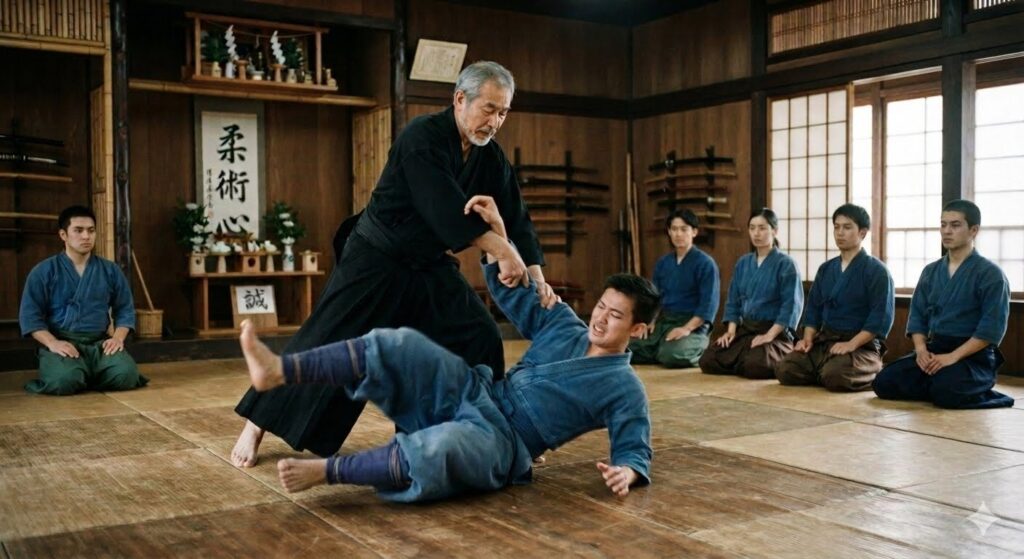
From the standpoint of the Japanese language, Jūjutsu and Jiujutsu are just two different Romanizations of the same word: 柔術. Sometimes even Jujitsu can be seen. Jiujutsu was a common Romanization used at the end of the 19th C, when language experts were still trying to determine the best methods of writing Japanese words in Roman letters, but as the system evolved the result was that the spelling settled on Jūjutsu. This is the same as Juujutsu, both of which indicate the long “u” sound. So what do the changes in the Romanization of the word Jūjutsu matter?
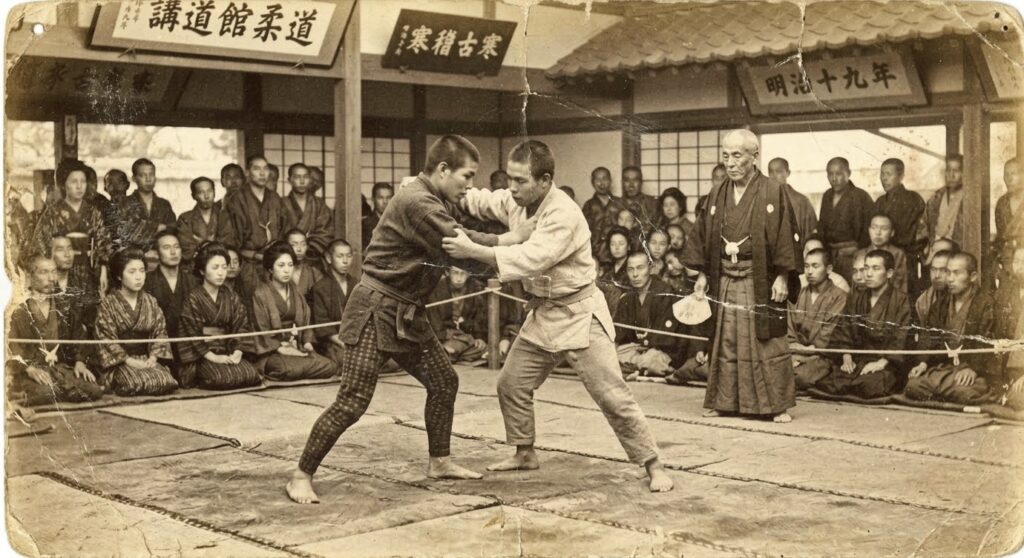
It shouldn’t matter, except that the turn of the century was a time of big changes. It was during this time that Kanō Jigorō, an educator in the Japanese school system, was changing the traditional Jūjutsu that he learned into a sport that could be safely used in schools. That sport would eventually come to be known as Jūdō, commonly anglicized as Judo in the West. In the decades between the use of Jiujutsu and Juudou or Jūdō, some Japanese people immigrated to Brazil and taught Jiujutsu before the name Jūdō was commonly used in Japan. The result is that in Brazil the name for Jūdō was stuck as Juijutsu.
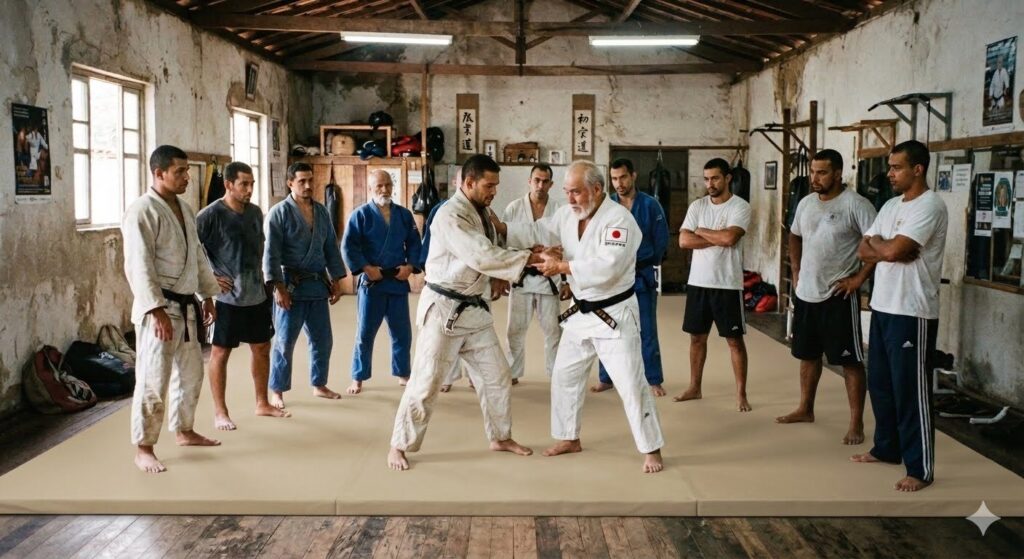
How any of this matters is that eventually some Brazilians immigrated to the United States and began teaching Brazilian Jiujutsu. So today it is common to see these two different spellings of the same word, but which actually denote two very different martial arts. Juijutsu is not the same as Jūjutsu. This can be confusing for people who don’t know the history of Japanese martial arts.
While the Romanization of the language was evolving, the martial arts were changing as well. Jūdō is descended from the older samurai Jūjutsu, but the dangerous techniques were removed so people, especially children, could compete safely with the techniques as a sport. Today it is considered a modern sport martial art and in Japan it is understood to be completely different from the older Samurai Jūjutsu. Brazilian Juijutsu should really be thought of as a branch of Judo, although it is not entirely the same as Jūdō. The Brazilian practitioners combined wrestling and a smattering of karate striking to create their “Brazilian Judo.”
What does it all mean? It means there is a big difference between traditional combat-oriented Samurai Jūjutsu and modern sport martial arts like Jūdō/Judo and derivatives like Brazilian Juijutsu. The sport versions being something people engage in much like wrestling, in competitions where after a winner is determined, no one is injured. The dangerous moves were eliminated. That’s great for winning trophies, but not ideal for life-and-death situations.
Traditional Jūjutsu preserves all of the dangerous techniques which are practiced slowly and safely, but give practitioners a wider range of fight-ending skills for use in real self-defense. Students starting martial arts training should be clear about the differences and decide upon an art that matches their goals. If you are interested in sport competitions, APMA is not a good choice. But if you don’t care about proving yourself to be the toughest guy in a sport, or wining trophies, and if you are just interested in effective self-defense, then the APMA might just be what you are looking for.